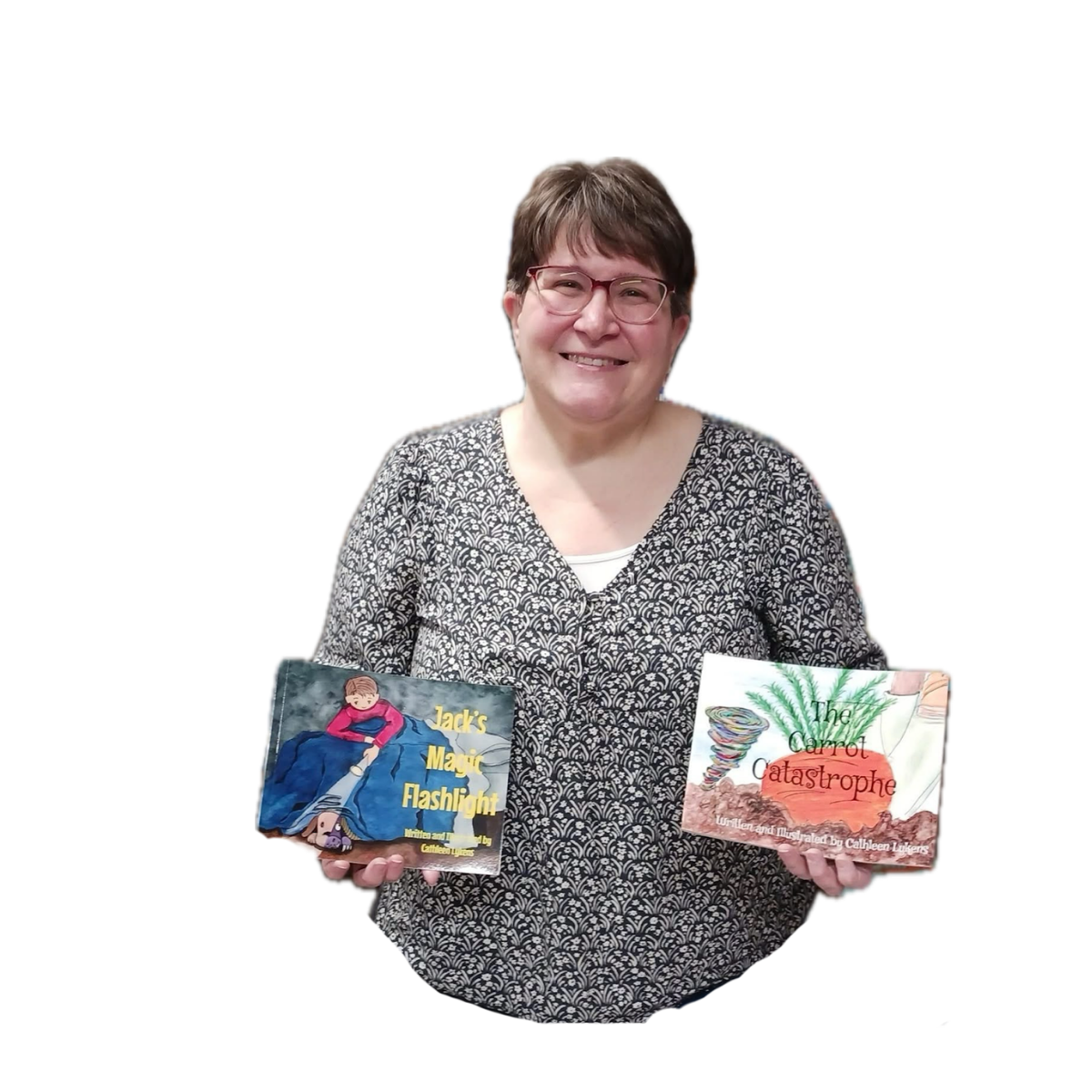
To help readers get to know Cathleen a little better, I asked her a few questions about her background, her creative process, and what inspires her books.
1. Tell us a little about yourself and what inspired you to become a children’s author.
I teach writing to junior high students, and in writing with them I partially or totally developed the core ideas of my books. I always tell them to challenge themselves, and I often talked about getting one of my books published.
I was not satisfied with the drawings I had made for the blank books we had produced together in my classes. Finally I decided that I just wasn’t pushing myself hard enough. I took some art classes at the local (very tiny) library offered by an artist I went to high school with.
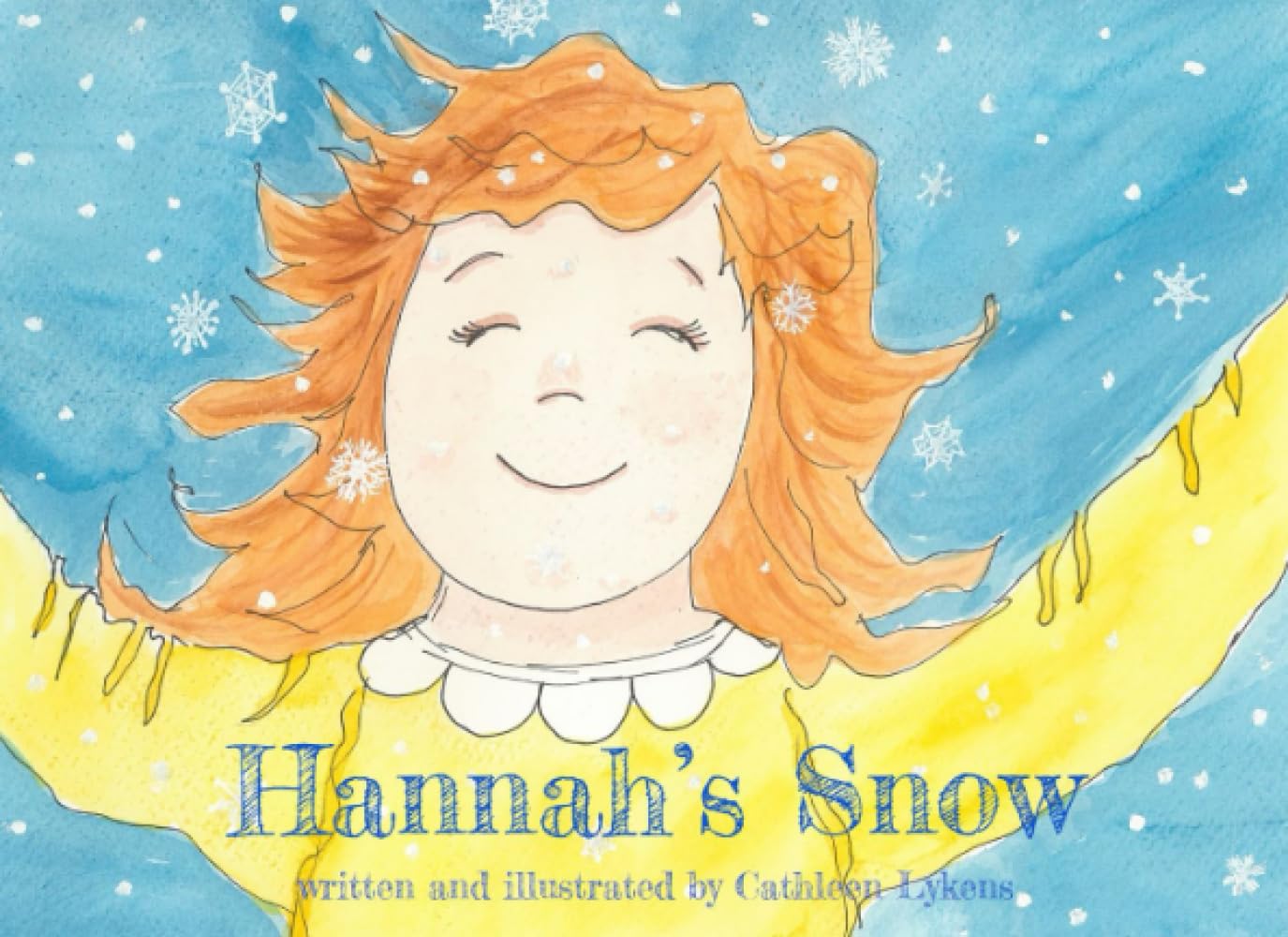
Scott asked us what we hoped to accomplish in his classes and set my goal as illustrating one of my stories. That was the birth of Hannah’s Snow as my first published for the public book.
2. Tell us about your creative process when choosing a topic or idea for a story.
My creative process involves being intrigued by a challenge, a turn of phrase, or something within my own life that inspires me.
The original concept for Jack’s Magic Flashlight took shape during a week-long teacher professional development class about teaching students to write and illustrate their own picture books. It was based on a gift my own son Jack had received.
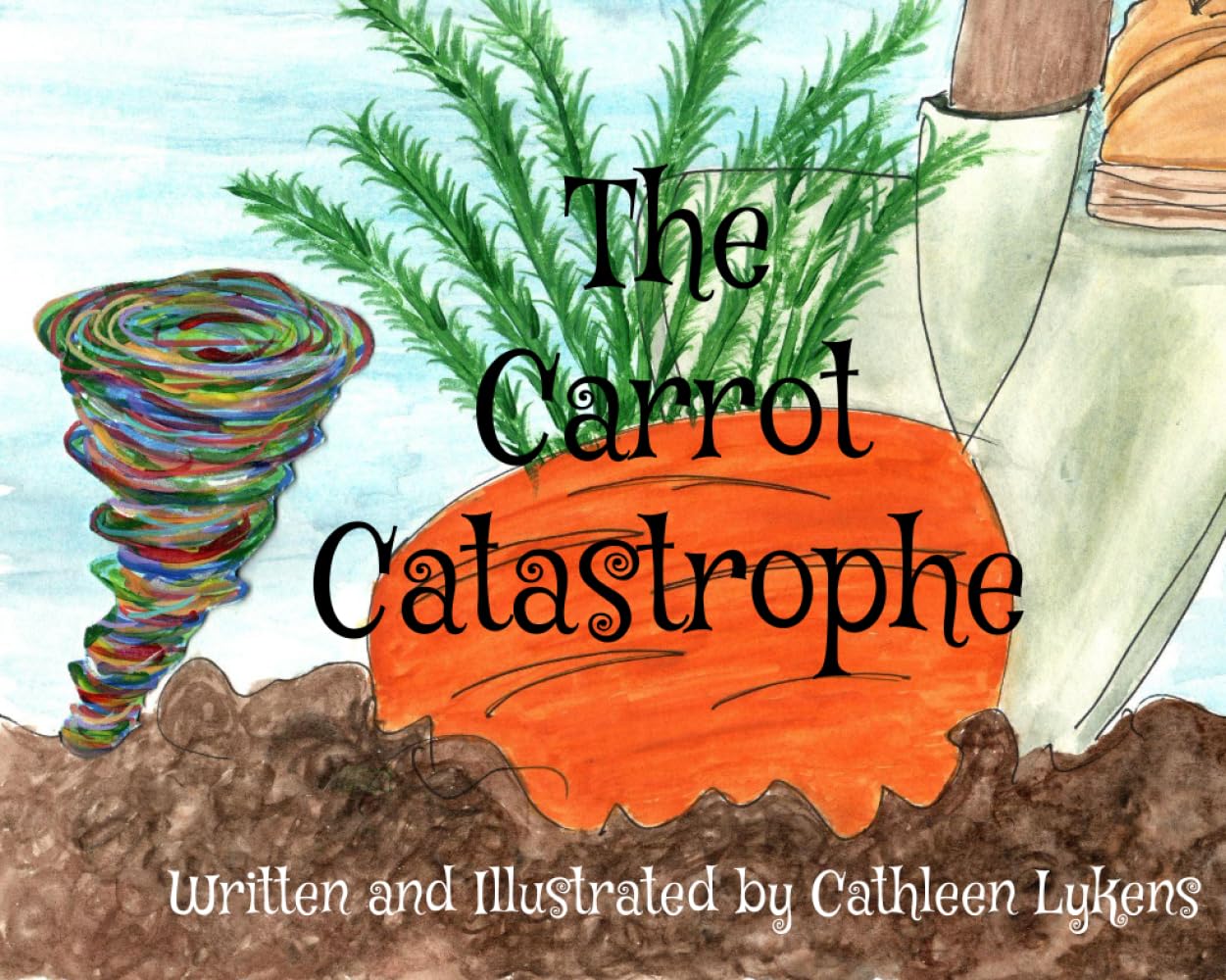
The Carrot Catastrophe was inspired by a visit by author/illustrator Matt Novak to the school where I have taught the last 35 years. Novak visited classrooms and talked to the students through sketching and developing characters. Miss Cordelia Crumpet was born in my sketches.
I challenged my 8th grade classes to write and illustrate their own books, and I created my own, too. I later refined those original sketches for my published book.
Hannah’s Snow began as a single sentence my son muttered as he stumbled down the steps one morning: “I woke up in a strangle of blankets.” A nickname based on a play move from one of my own dogs created Ginger Ninja.
3. What age group are your books best suited for, and what makes them a great fit for those readers?
My first three books are picture books aimed at children ages 3–8. The pictures are designed to catch their eyes. The stories may contain a few sophisticated vocabulary words, but the music and rhythm of the sentences combine well.
Ginger Ninja is a chapter book—level 2, probably best for 8 to 10 years old. I hope that her stories and her gang of canine friends continue as a series.
4. Across the books you’ve written, what messages, lessons, or feelings do you hope children take away from your stories?
Hannah’s Snow is about appreciating the beauty around us.
Jack’s Magic Flashlight is about overcoming fears with our own inner light.
The Carrot Catastrophe shows how selfishness can be draining—that we should share kindness.
Ginger Ninja encourages us to find our inner superheroes.
5. What was your favorite childhood book growing up?
I have to choose one—I can’t do that! I loved the Through the Golden Windows anthologies on my family’s bookshelves, Laura Ingalls Wilder, Beverly Cleary, E. B. White, Madeleine L’Engle, Anne McCaffery… the list can go on and on.
6. Who are some of your favorite children’s book authors today?
I like Jan Brett, Jane Yolen, Sue Denum, Dav Pilkey, and Margie Palatini, all from when my children were little. I know that I could find a million more, but I haven’t hit the shelves too hard yet. I imagine that will change rapidly should grandchildren arrive.
7. What part of writing children’s books do you enjoy the most?
I have enjoyed finding better ways to make my stories have more imagery. As I harp to my students, revising is key. I also really enjoy the character development that is part of illustration.
8. What has been the most rewarding moment for you as a children’s author so far?
I have made several school visits to the small schools within my part of the Diocese, and I enjoy talking with students about how they can also develop their own stories and pictures.
I also love festivals. I will be revisiting a local Children’s Book Festival in two weeks—for the third year in a row.
9. What has been your biggest challenge as a self-published author?
Promotion—getting my book noticed by the greater public.
10. What advice would you give to kids who might want to write their own stories?
Write them. Keep a notebook of ideas. Collect pictures, words, and headlines. Write lists of ideas, make sketches and write.
It is just like any other sport—you only get better when you practice.